
A common DeFi problem usually starts like this. Funds sit on one network, but the yield farm, lending app, or trading opportunity is on another. The wallet balance is visible, yet the capital is stuck in the wrong ecosystem. That is the point where many users begin searching what is a cross-chain bridge and why cross-chain DeFi depends on it so heavily.
In simple terms, a cross-chain bridge is a tool that helps assets or messages move between separate blockchains. It can be described as a decentralised application that enables asset transfers between blockchains, typically by locking or burning tokens on the source chain and unlocking or minting tokens on the destination chain.
What is being established in the era of DeFi is hence not a one-chain-per-now phenomenon. Large beleaguered ecosystems remain in various forms, ranging from liquidity providers being fettered and exposed to a number of environments. Cross-chain bridges are but one of the major irons which enchain them together.
What is a cross-chain bridge in simple terms?

The easiest way to answer what is a cross-chain bridge is to think of it as a transfer layer between blockchains that do not natively share state. If assets are on Chain A but needed on Chain B, the bridge provides a mechanism to represent value across both environments.
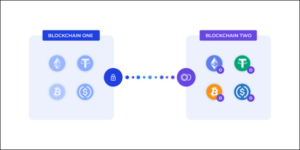
In many cases, that process follows one of two common patterns:
- lock on the source chain and mint a wrapped version on the destination chain
- burn on the source chain and unlock or mint the corresponding asset on the destination chain
That explains why cross chain crypto can feel more complex than a normal wallet transfer. A bridge is not simply sending coins from one address to another on the same network. It is coordinating movement or representation of value across separate blockchains.
Why cross chain DeFi needs bridges
Without bridges, DeFi liquidity would stay fragmented. Assets on one chain would be difficult to use on another, and users would need to exit one ecosystem before entering the next.
This is exactly where cross chain DeFi becomes practical. Bridges make it possible to:
- move assets to another network for lower fees
- access lending, trading, or staking applications on a different chain
- consolidate liquidity across ecosystems
- use tokens in apps that exist outside the original network
That does not mean every bridge works the same way. Some focus mainly on token transfers. Others are built around messaging, programmable transfers, or omnichain application design. Chainlink CCIP, for example, is described in official documentation as a cross-chain interoperability protocol for token transfers, messaging, and programmable token transfers. LayerZero documentation similarly frames its stack around cross-chain messaging for omnichain applications.
How cross-chain bridges work
The best way to explain what is a cross-chain bridge is to walk through the process.
1. A user starts on the source chain
The user chooses an asset and a destination network. In most bridge flows, the source wallet first approves the bridge or token contract to interact with the selected asset, then confirms the bridge transaction. This approval and transfer flow is reflected in bridge tutorials and official token transfer documentation.
2. The asset is locked or burned
A common bridge model locks tokens in a smart contract on the source chain or burns them, depending on the design. Chainlink’s bridge overview describes this lock or burn step as part of a typical transfer flow.
3. A message or proof is passed to the destination side
The bridge needs a way to verify that the source side action really happened. Different systems solve this differently. Some rely on validator or guardian style networks. Some use messaging protocols. Some allow applications to choose their own verification stack.
4. The destination chain mints or releases value
Once the destination side accepts the message, the bridge can mint a wrapped asset or release the relevant token. The bridge locks tokens on the source chain and mints wrapped assets on the destination chain. This full cycle is what turns cross chain crypto from an isolated balance into usable liquidity elsewhere.
Cross-chain bridge vs cross-chain messaging
Many users treat every bridge as the same thing, but the market has evolved.
Some systems are classic token bridges. Their main job is moving assets across chains. Others are broader interoperability layers built around messaging first, with token transfer as one use case.
This distinction matters in cross chain DeFi because moving value is only part of the story. Applications increasingly want to send instructions, trigger contract logic, or coordinate actions between chains.
What users actually do with a DeFi bridge
A DeFi bridge is usually used for one of four tasks:
Accessing cheaper execution
A user may bridge stablecoins or other assets from a more expensive network to a cheaper one to reduce transaction costs.
Reaching new DeFi opportunities
A protocol may exist only on one chain, so a bridge becomes the path into that ecosystem.
Consolidating liquidity
Instead of leaving capital idle on several networks, users may move funds to where volume or yield is stronger.
Supporting multi-chain portfolio management
Users who operate across several networks often treat cross-chain bridges as routine portfolio infrastructure rather than one off tools.
That is why cross chain DeFi is not just a technical niche. For active users, it is often the normal way to interact with fragmented on-chain liquidity.
Risks of cross-chain bridges
Any serious explanation of what is a cross-chain bridge has to cover risk. Bridges are useful, but they are also one of the most sensitive pieces of crypto infrastructure.
Smart contract risk
If the source or destination contracts fail, user funds or wrapped assets may be affected.
Verification risk
A bridge is only as strong as the system that confirms cross-chain messages. If that layer is weak, the whole transfer path becomes weak.
Wrapped asset risk
In lock and mint models, the destination asset is often a wrapped representation rather than the original native token.
Liquidity and execution risk
A bridge may be technically functional but still produce poor execution if liquidity is shallow or transfer paths are congested.
User error
Wrong chain selection, wrong wallet network, or misunderstanding whether the result is a native token or a wrapped token are still common mistakes.
How to assess the best crypto bridges
The article topic includes searches around the best crypto bridges, and the best blockchain bridge, but the useful answer is not a generic ranking. The better question is how to judge them.
When comparing cross-chain bridges, focus on:
- security design and verification model
- whether the output asset is native or wrapped
- supported chains and tokens
- fees and transfer times
- liquidity depth
- transaction tracking tools
- clarity of the user interface
- developer documentation and transparency
In practice, the best blockchain bridge for one user may be the wrong choice for another. A trader moving stablecoins, a developer building omnichain apps, and a long term user shifting treasury assets may all need different bridge properties.
Common mistakes in cross chain crypto

Teams and users often make the same errors in cross chain crypto:
- assuming all destination tokens are native assets
- ignoring security design and focusing only on speed
- bridging into a chain without checking app support first
- sending funds before confirming wallet and network compatibility
- treating a bridge like a simple same-chain wallet transfer
These mistakes matter because cross chain DeFi adds one more layer of complexity to normal DeFi operations. The transfer itself may succeed while the resulting asset still turns out to be the wrong one for the next step.
Final thoughts
So, what is a cross-chain bridge in practical terms? It is the infrastructure that helps assets or messages move between otherwise separate blockchains, making cross chain DeFi possible at scale. In many cases that means locking or burning value on one chain, then minting or releasing value on another.
That is why cross-chain bridges matter so much. They are not just convenience tools. They are one of the core layers that connect fragmented liquidity, users, and applications across crypto networks. But they also carry meaningful design, security, and execution risk. The smartest way to approach them is not to ask for a simple list of the top crypto bridges. It is to understand how a DeFi bridge works, what trust assumptions it introduces, and whether it matches the exact job you need it to do.
FAQ
Why is cross chain DeFi important?
Cross chain DeFi helps users move liquidity across ecosystems so they can access applications, yield opportunities, and trading venues on different chains.
How do cross-chain bridges usually work?
Most cross-chain bridges lock or burn tokens on the source chain, pass a verified message, and then mint or release value on the destination chain.
What is the difference between a DeFi bridge and a messaging protocol?
A DeFi bridge often focuses on asset transfers, while broader interoperability protocols can support token transfers, contract messages, or both.
What should users check when choosing the best crypto bridges?
When comparing the best crypto bridges, users should review security design, supported chains, whether the destination asset is wrapped or native, transfer fees, and liquidity depth.
Are the best blockchain bridge tools always the fastest?
No. The best blockchain bridge is not always the fastest one. Security design, verification quality, and the type of asset received can matter more than speed alone.