
Decentralized finance introduces ideas that many people find odd. Flash loans, for instance, are one of the prime examples. To a new crypto user, flash loans seem to be an almost incredible concept: borrowing without collateral, using it instantly, and repaying in that very transaction. Except that this is exactly how DeFi flash loans actually function.
This is a tool of decentralized finance that undermines most definitions and assumptions of lending, instead relying on code and transaction logic. A flash loan creates the unique ability of having the entire transaction rolled back if the funded amounts are not repaid at once. This feature is what makes flash loans work.
This guide offers flash loans explained in simple terms. We will cover what they are, how they work, where they are used, and why they are both useful and risky. If you have ever wondered what are flash loans, this is the place to start.
What are flash loans
A flash loan is a type of uncollateralised crypto loan that exists only for the duration of one blockchain transaction.
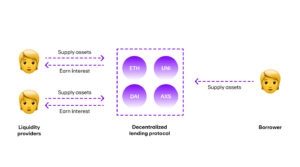
In normal lending, a lender needs protection. If someone borrows money, the lender wants collateral, a credit check, or some legal claim in case the borrower does not repay. In DeFi, there is usually no credit scoring in the traditional sense, so most loans are overcollateralised.
Flash loans are different. With DeFi flash loans, the borrower does not provide collateral upfront. Instead, the blockchain enforces one strict rule: the loan must be borrowed and repaid within the same transaction. If that repayment does not happen, the transaction fails and the blockchain state returns to where it started.
That is the key to flash loans explained simply: no collateral is needed because there is no lasting risk to the lender if the transaction fails.
Why flash loans are possible in DeFi
The reason flash loans can exist comes down to how smart contracts work. A smart contract can bundle many actions into one atomic transaction. In blockchain language, “atomic” means all steps either happen together or none of them happen at all.
Imagine this simplified flow:
- A protocol lends you funds.
- You use those funds for a specific action.
- You repay the loan plus a fee.
- If repayment fails, everything is cancelled.
This is why DeFi lending explained in the context of flash loans looks so different from ordinary borrowing. The protocol is not trusting your identity or your promise. It is trusting the transaction logic.
How flash loans work step by step
1. The borrower requests funds
A user or developer calls a smart contract that offers flash loans. The contract temporarily releases the requested amount.
2. The funds are used immediately
The borrower’s code then performs one or more actions with those funds. This could be a token swap, collateral refinancing, debt restructuring, or arbitrage between markets.
3. The loan is repaid
Before the transaction ends, the borrowed amount plus any protocol fee must be returned.
4. The transaction is either accepted or cancelled
If the repayment succeeds, the blockchain confirms the full transaction. If not, the whole process is rolled back.
So when people ask what are flash loans, the cleanest answer is this: they are temporary uncollateralised loans that exist for one transaction only.
A simple example of a flash loan
Suppose one decentralised exchange is selling Token A for a lower price than another exchange. That creates a small arbitrage opportunity. A trader might use a flash loan like this:
- borrow a large amount of stablecoins
- buy Token A on Exchange 1
- sell Token A on Exchange 2 for a higher price
- repay the flash loan plus the fee
- keep the difference as profit
This is one of the classic examples of flash loans arbitrage. The trader did not need to already own the capital for the trade. The smart contract provided it for one transaction, and as long as the profit covered the repayment and fees, the trade worked.
If the price difference vanished before completion, the transaction would fail, and the lender would still be protected.
Common use cases for flash loans
Flash loans are not only about exploiting small price differences. They can be used in several ways across DeFi.
Arbitrage
This is the most widely discussed use case. Traders use flash loans arbitrage strategies to exploit pricing differences between decentralised exchanges or lending protocols.
Collateral swaps
A user may want to replace the collateral backing a loan without first closing the entire position with their own funds. A flash loan can temporarily provide the capital needed to unwind and rebuild that position in one step.
Debt refinancing
Flash loans can help move debt from one protocol to another if the second platform offers better rates or more favourable terms.
Self liquidation avoidance
If a position is close to liquidation, a flash loan can sometimes be used to repay part of the debt, free the collateral, and restructure the loan more efficiently.
Liquidations
Some traders use flash loans to liquidate undercollateralised positions on lending platforms. In return, they receive liquidation bonuses or discounted collateral. These uses show that DeFi lending explained properly is not just about passively earning yield. It also includes advanced tools that optimise capital movement.
Why flash loans matter
Flash loans are important because they reduce the capital barrier for certain DeFi strategies. In traditional finance, many arbitrage or refinancing opportunities are only available to firms with significant resources. In DeFi, the smart contract can provide temporary access to capital without needing long term collateral.
That can make markets more efficient. Arbitrage traders help keep prices aligned across venues. Refinancing tools help users manage positions more flexibly. Liquidators help keep lending markets solvent.
Why flash loans are controversial
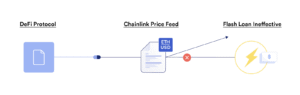
Flash loans are clever, but they also have a darker side.Because they let users access large amounts of capital very quickly, they can be used to exploit weaknesses in DeFi protocols. When people hear about flash loans in the news, it is often in the context of attacks. That does not mean flash loans themselves are malicious. The problem is usually that another protocol has a vulnerability.
For example, an attacker may use a flash loan to borrow a large amount, manipulate the price in a thin liquidity pool, trigger a broken oracle mechanism, and then extract profit before repaying the loan. In this sense, flash loans are like a force multiplier. They can magnify both legitimate strategies and malicious ones.
The main risks of flash loans
If you want flash loans explained honestly, you cannot ignore the risks.
Smart contract complexity
Flash loans are not beginner friendly tools to execute manually. They usually require programming knowledge, smart contract interaction, or the use of sophisticated DeFi tooling.
Transaction failure
Because everything must happen in one transaction, even a small issue can cause the entire attempt to fail. Slippage, gas spikes, routing errors, or changing prices can all break the sequence.
Fees and profitability
Even if you find an opportunity, it must be profitable after protocol fees, exchange fees, and network gas costs. A theoretical arbitrage can disappear once these are included.
Competition
Many traders and bots scan markets constantly for arbitrage. By the time you spot an opportunity, it may already be gone.
Protocol exploits
Flash loans are often associated with attacks because poorly designed DeFi protocols can be manipulated with borrowed capital. Users and builders need to understand that the loan is not the root problem. Weak protocol design is.
Flash loans versus ordinary DeFi loans
Ordinary DeFi loans
Most lending platforms require collateral. If you want to borrow $1,000 worth of a token, you may need to deposit more than $1,000 in another asset first. The loan remains open over time until you repay it.
Flash loans
There is no long term borrowing period. No collateral is required because the funds never leave the transaction unprotected. The loan either succeeds and is repaid instantly, or it is cancelled entirely.
That is why DeFi lending explained through standard collateralised lending is much more familiar than flash loans. Flash loans are a more specialised instrument built for speed and precise execution.
Are flash loans only for experts
In practice, mostly yes. The basic idea can be understood by anyone, but using them effectively usually requires technical knowledge, access to good tools, or automation. Most retail users do not take out flash loans casually.
That said, many people benefit from flash loans indirectly. Some DeFi apps use them behind the scenes to simplify refinancing, collateral swaps, or liquidation tools. In those cases, the end user may never need to manually build the full transaction. So while what are flash loans is a beginner question, using them directly is often an advanced activity.
Are flash loans good or bad for DeFi
They are neither inherently good nor inherently bad. They are a tool. Used well, they make markets more efficient, help users manage debt, and allow more advanced financial operations without locking up large amounts of capital.
Used against weak protocols, they can intensify attacks and expose bad design. In many famous DeFi incidents, the real failure was an insecure oracle, poor liquidity assumptions, or a flawed contract. The flash loan just made the exploit bigger and faster.
A mature view is that DeFi flash loans reveal both the strengths and weaknesses of decentralised finance. They show how powerful composable finance can be, but also how carefully protocols must be designed.
Final thoughts
DeFi flash loans are one of the most unusual innovations in decentralised finance. They allow users to borrow large amounts of crypto without collateral, provided the funds are returned in the same transaction. That sounds almost unreal at first, but once you understand atomic transactions, the logic becomes much clearer.
If you wanted flash loans explained in the simplest possible way, this is the core idea: the loan is safe for the lender because it either gets repaid immediately or never really happens.
They are most often used for arbitrage, refinancing, and liquidations, and they show just how flexible DeFi can be. At the same time, they highlight the importance of secure protocol design, because a powerful tool in the wrong environment can quickly become dangerous.
FAQ
What are flash loans in DeFi
Flash loans are uncollateralised loans that must be borrowed and repaid within a single blockchain transaction. If repayment fails, the whole transaction is cancelled.
How do DeFi flash loans work
A smart contract lends funds, the borrower uses them instantly for a specific action, then repays the amount plus a fee before the transaction ends. If that does not happen, nothing is executed.
What is flash loans arbitrage
It is a strategy where a borrower uses a flash loan to profit from a price difference between two markets, repays the loan in the same transaction, and keeps the remaining profit.
Disclaimer: The material in this article is not financial or investment advice. Everything stated here reflects the author's personal view and should not be treated as a recommendation to trade or invest. We make no warranties regarding the accuracy, reliability or completeness of the information presented. Cryptocurrency markets are highly volatile and can move unpredictably. Before committing any funds, every investor, trader or crypto user should study several independent sources and check the regulations that apply in their own jurisdiction.