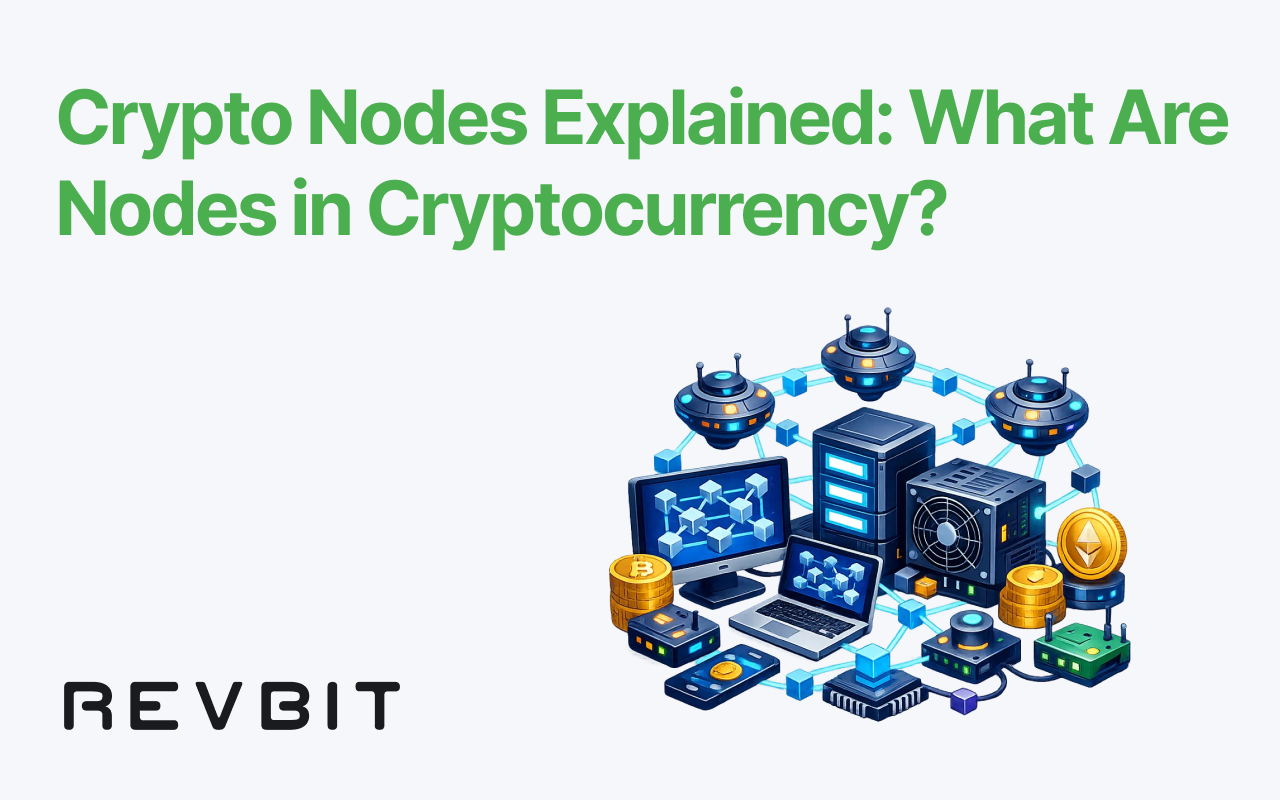

People describe cryptocurrency as being about coins, tokens, wallets, market prices, and things like that. But in reality, coins would never be close to seeing actual delivery without the infrastructure working behind the scenes and supporting them. Each time a payment is made, a block is proposed, and a wallet checks its balance and that is where nodes come in. They are busy doing the job of keeping the blockchain alive, while at the same time acting as the control for truth and fairness as well as guaranteeing accountability for all nodes.
If you have ever asked, what is a node in blockchain, the simplest answer is this: a node is a kind of computer or server that is running blockchain software, connecting to other machines on the same network, and adhering to the rules of the protocol. In Bitcoin, the full nodes (unlike SPV nodes) verify transactions and blocks themselves, and they relay legitimate information to others. There are various kinds of Ethereum nodes that can run in full, partially synced light mode, or archive: what apostatized over time is that they typically use both an execution client and a consensus client to stay in sync with the network.
Why nodes matter so much

The value of nodes is not just technical. They are central to the idea of decentralisation. Instead of one company deciding which transactions are valid, many independent machines follow the same public rules. On Bitcoin, each full node separately checks the chain and reaches its own conclusion about what is valid. That shared rule following is what allows consensus to emerge without a central authority. In practical terms, this means that the network does not depend on a single operator, server room, or decision maker.
Nodes also make blockchains resilient. Because many machines hold and verify the ledger, the network can continue working even if some nodes go offline. Copies of data remain available, transaction history is harder to censor, and users are not forced to trust one gateway for access. This is one reason crypto nodes are often described as the backbone of the blockchain ecosystem. They preserve both continuity and independence.
What nodes actually do
At a basic level, nodes perform three jobs. First, they store blockchain data, either fully or partially depending on the node type. Second, they verify whether incoming transactions and blocks follow the network rules. Third, they communicate with peers by sharing valid data across the network. A blockchain only stays coherent because large numbers of nodes are carrying out these tasks at the same time.
When a user broadcasts a transaction, nodes receive it and inspect it. They check things such as signatures, formatting, and whether the transaction fits the protocol. If the data is valid, it is passed on to other peers. If it breaks the rules, it is rejected. This process is important because it means the network does not need blind trust. The software verifies behaviour locally before accepting it.
On Ethereum, node software also exposes interfaces such as RPC methods, which allow wallets and applications to query the chain, submit transactions, and interact with smart contracts. In other words, nodes are not just for network maintenance. They are also the access layer used by many apps and services.
How nodes communicate with each other
Nodes do not report to a central server. They operate in a peer to peer environment. That means each node connects to other nodes, exchanges data with them, and helps spread information throughout the network. Bitcoin documentation describes full nodes as peers that collaboratively maintain the network for block and transaction exchange.
A new node must first discover peers and begin synchronising. During synchronisation, it downloads the data it needs and checks that data against the protocol rules. Depending on the chain and the chosen node type, this can take from a short time to several days. Once synchronised, the node can participate more fully by verifying new activity and relaying updates. Ethereum’s documentation notes that different sync strategies exist, while Bitcoin documentation distinguishes between full verification and lighter approaches.
This communication model is one of the reasons blockchains are difficult to shut down or manipulate. Information can travel across many routes, and the network does not stop functioning because one machine disappears. That is the practical strength of crypto nodes in a distributed system.
The main types of nodes
Not all nodes do the same amount of work. Different node types exist because users and organisations have different needs.
Full nodes
A full node is the most important reference point for understanding blockchain security. Bitcoin.org defines a full node as a program that fully validates transactions and blocks, and notes that most full nodes also relay that valid data to further nodes. Full nodes are trusted less than external services because they verify the chain for themselves. That is why people often see them as the strongest expression of the trust minimised model behind crypto.
Light nodes
Light nodes are designed for lower resource use. Instead of keeping all blockchain data and performing every check locally, they request some information from fuller providers and verify only what they need. Ethereum’s documentation explains that light nodes only process block headers and obtain additional data when necessary. Bitcoin documentation describes a related model called Simplified Payment Verification, where a client downloads block headers and asks full nodes for further transaction data as needed.
This makes light nodes useful for wallets and devices with limited storage or processing power. The trade off is that they rely more on external data sources than a full node does.
Archive nodes
Archive nodes go further than ordinary full nodes in terms of historical data access. Ethereum.org explains that archive nodes store everything a full node keeps and maintain an archive of historical states, which makes them especially useful for analytics platforms, explorers, and advanced infrastructure services. They are powerful, but they also require much more storage.
Mining nodes
In proof of work systems such as Bitcoin, mining is the activity of competing to create the next block. However, mining and running a node are not exactly the same thing. A miner focuses on block production, while a full node focuses on validation. This distinction matters because even a powerful miner cannot simply rewrite the rules if nodes refuse to accept invalid blocks.
Validator nodes
In proof of stake systems, validators take the place of miners in block production. Ethereum’s node architecture explains that a node needs a validator client to propose blocks, while the execution and consensus clients handle validation, state transitions, and staying in sync. The validator role is optional for a regular node, but essential for those who want to take part in proposing and attesting to blocks. On Ethereum, adding a validator currently requires staking 32 ETH.
Nodes, miners, and validators are not the same thing
This is one of the most common sources of confusion. People sometimes assume that every node creates blocks or earns rewards. That is not true. A node is the broader category. It refers to software that participates in the network by verifying, storing, or relaying information. Miners are specific participants in proof of work systems, and validators are specific participants in proof of stake systems.
A useful way to think about it is this. Nodes maintain the rules of the network. Miners and validators are the participants involved in adding new blocks under those rules. The separation matters because it limits concentration of power. Even block producers still need the wider network of nodes to accept the blocks they create.
Why someone might run a node
Running your own node gives you more direct access to the blockchain. Instead of depending on a third party service to tell you what the chain says, your software can verify the data itself. Ethereum.org explicitly highlights that running your own node opens new possibilities and helps support the ecosystem, while its light client documentation says that a full node is the most trustless, private, decentralised, and censorship resistant way to interact with Ethereum.
There are also practical benefits. Developers may need a node for application infrastructure. Businesses may want reliable access to chain data. Privacy conscious users may prefer not to depend on public RPC providers. Some people simply run nodes because they want to strengthen decentralisation and contribute resources to the network. On Bitcoin, the official documentation notes that if not enough full nodes serve lightweight clients, users are pushed towards centralised services instead.
How to set up a node
The exact process depends on the blockchain, but the general path is straightforward. First, choose the type of node you want to run. A full node gives deeper verification, while a lighter setup is easier on hardware. Ethereum’s node guide and Bitcoin’s full node guide both make it clear that requirements differ depending on your goals.
Next, download the official client software for the network you want to join. After installation, the node must synchronise with the chain. This can take time, especially for fuller configurations. You may also need to adjust network settings so the node can communicate properly with peers. Bitcoin’s documentation includes network configuration and port guidance, while Ethereum explains the role of different client components in a modern node setup.
You should also be realistic about maintenance. Nodes need updates, storage monitoring, and a stable internet connection. Bitcoin Core’s guide lists minimum hardware requirements and warns that running a node comes with costs and certain operational risks. In other words, running a node is very achievable, but it is still a real piece of infrastructure rather than a one click novelty.
Common misconceptions about nodes
One myth is that nodes are only for professionals. In reality, many ordinary users run them at home, especially if they want more control or better privacy. Another myth is that every node stores everything forever. That is not always the case. Bitcoin supports pruned nodes, and Ethereum distinguishes between full nodes and archive nodes with different storage behaviour.
A further misunderstanding is that nodes and wallets are identical. Some wallets connect to nodes, but a wallet is not the same thing as the node itself. Likewise, a node does not guarantee profit. Simply running one does not automatically mean you will earn rewards. That depends on the network model and whether you are also mining or validating.
Final thoughts
Understanding nodes helps explain why blockchains work at all. Markets may grab the headlines, but the real integrity of a blockchain comes from the machines that verify rules, share data, and maintain the ledger independently. That is why learning about crypto nodes is one of the best ways to understand cryptocurrency beyond price action and speculation.
So, what is a node in blockchain terms? It is the software powered participant that makes decentralised consensus possible. Whether it is a full node checking every block, a light node helping a wallet stay connected, or an archive node supporting heavy data queries, each node plays a part in keeping the network honest, accessible, and resistant to control.
FAQ
What is a node in blockchain?
A node is a computer or server running blockchain software that connects to other participants, checks network data, and helps maintain a shared version of the ledger according to the protocol rules.
Are crypto nodes the same as miners?
No. A node is a broader network participant. Miners are specific participants in proof of work systems who compete to create blocks, while ordinary nodes mainly verify and relay data.
Why are crypto nodes important?
Crypto nodes are important because they store or access blockchain data, verify transactions and blocks, relay valid information, and help preserve decentralisation and censorship resistance.
Disclaimer: The material in this article is not financial or investment advice. Everything stated here reflects the author's personal view and should not be treated as a recommendation to trade or invest. We make no warranties regarding the accuracy, reliability or completeness of the information presented. Cryptocurrency markets are highly volatile and can move unpredictably. Before committing any funds, every investor, trader or crypto user should study several independent sources and check the regulations that apply in their own jurisdiction.