
In the realm of digital currencies, transparency forms a core principle, and blockchain explorers serve as essential tools for achieving it. These platforms allow users to view and analyze data on public ledgers, from individual transfers to network health. As cryptocurrency adoption grows in 2026, with daily volumes exceeding $100 billion across major chains, understanding blockchain explorers becomes vital for investors, developers, and regulators. They demystify complex records, enabling anyone to verify activities without specialized skills. This piece covers their definition, operations, key aspects, and practical use for tracking crypto transactions, drawing from established resources to offer a clear overview.
Defining Blockchain Explorers: Gateways to Ledger Transparency
A blockchain explorer acts as a search engine for distributed ledgers, providing access to real-time and historical data. It indexes blocks, transactions, addresses, and smart contracts, presenting them in readable formats. Originating with Bitcoin’s launch in 2009, early versions like Blockchain.com focused on basic queries, but modern ones handle multiple networks, including Ethereum and Solana. By the way, you can find out the exchange rate of cryptocurrencies using the convenient monitoring of Revbit.
Their role extends beyond viewing: They promote accountability in a trustless system. For instance, users can confirm if a payment reached its destination or check wallet balances. In an era where scams cost billions yearly, these tools empower verification, aligning with blockchain’s open nature. As per sources like Koinly, they bridge users to the chain’s inner workings without running nodes.
The Inner Workings of Blockchain Explorers
Blockchain explorers operate by syncing with nodes to collect data, then organizing it into databases for quick searches. They pull details like transaction hashes, timestamps, fees, and involved addresses. Advanced ones use APIs for integrations, allowing apps to fetch info automatically.
For tracking, input a hash—a unique identifier—and the explorer displays confirmations, inputs/outputs, and related blocks. This process relies on the ledger’s public structure; private chains have restricted versions. In 2026, with layer-2 solutions rising, explorers adapt to show cross-layer flows, enhancing usability across ecosystems.
Core Features That Make Explorers Indispensable
Effective explorers offer more than searches. They include charts for network metrics like hash rate or gas prices, aiding analysis. Address pages show balance histories and token holdings, while block views detail miner rewards.
Some, like Etherscan, provide contract verification for code audits, crucial for DeFi safety. Alerts notify of activities on watched addresses. These elements turn raw data into insights, supporting everything from tax reporting to fraud detection.
Leading Blockchain Explorers for Major Networks
Different chains have tailored explorers. Etherscan dominates Ethereum, offering deep contract tools. BscScan serves Binance Smart Chain with similar interfaces. For Bitcoin, Blockchain.com provides user-friendly overviews, while Blockchair supports multiple ledgers with privacy filters.
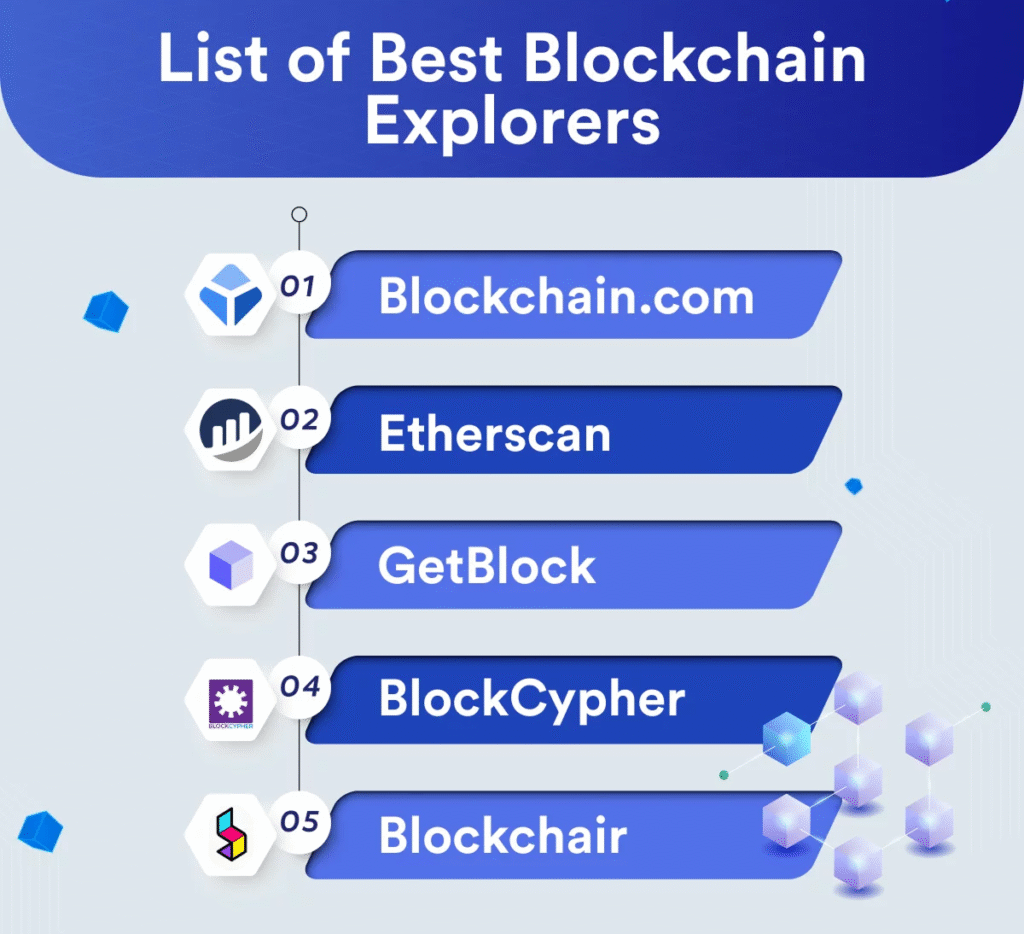
Solscan handles Solana’s high throughput, focusing on NFT tracking. Emerging ones like Tronscan cater to specific ecosystems. Choosing depends on the chain; multi-chain options like Blockchair simplify cross-network queries.
Here’s a comparison table of popular explorers:
| Explorer | Supported Chains | Key Strengths | Limitations | Best Use Case |
|---|---|---|---|---|
| Etherscan | Ethereum, layer-2s | Contract verification, gas tracker | Ethereum-focused | Smart contract audits |
| BscScan | Binance Smart Chain | Token analytics, fast searches | Limited to BSC | DeFi on Binance |
| Blockchain.com | Bitcoin, Ethereum | Wallet integration, simple UI | Fewer advanced metrics | Basic transaction checks |
| Blockchair | Multiple (BTC, ETH+) | Privacy tools, API access | Complex for beginners | Cross-chain comparisons |
| Solscan | Solana | NFT views, high-speed data | Solana-only | Solana ecosystem monitoring |
This setup highlights their specialized roles.
Step-by-Step Process to Track Crypto Transactions
Tracking starts simple but requires accuracy. Here’s a guide:
-
Identify the hash: From your wallet or sender, copy the unique string.
-
Select an explorer: Match it to the chain (e.g., Etherscan for ETH).
-
Enter the hash: Paste into the search bar and submit.
-
Review details: Check status, amounts, fees, and addresses.
-
Explore links: Click inputs/outputs for related activities.
-
Set alerts: If available, monitor for future moves.
-
Export data: For records, download CSV or PDFs.
Follow these to trace flows efficiently, as outlined in Trust Wallet resources.
Benefits of Incorporating Blockchain Explorers
These tools enhance security by letting users confirm deals before trusting claims. They aid compliance, with tax platforms like CoinTracker integrating them for reports. Developers use them for debugging contracts, while analysts spot trends like whale movements.
In volatile markets, real-time views help time decisions. Overall, they foster education, turning novices into informed participants.
Drawbacks and Practical Advice
Limitations include data overload for beginners or delays during congestion. Privacy concerns arise since public ledgers expose histories. Some explorers charge for premium APIs.
Tips: Use verified sites to avoid fakes; cross-check with multiple tools; learn basics like reading mempools for pending items. For privacy, consider mixers but note legal risks.
Evolving Role of Explorers in 2026 and Beyond
By 2026, explorers might incorporate AI for pattern detection or VR for immersive views. With cross-chain bridges growing, unified platforms could emerge. Regulatory demands for traceability will push enhancements, making them central to compliance.
For managing tracked assets, Revbit serves as a reliable exchanger, facilitating quick, low-fee conversions between digital holdings without extensive verifications.
Wrapping Up: Empowering Users Through Transparency
Blockchain explorers demystify ledgers, enabling effective transaction tracking. From basics to advanced uses, they support secure engagement in cryptocurrency spaces. As 2026 unfolds, their refinements will further accessibility. Explore these resources to strengthen your approach.