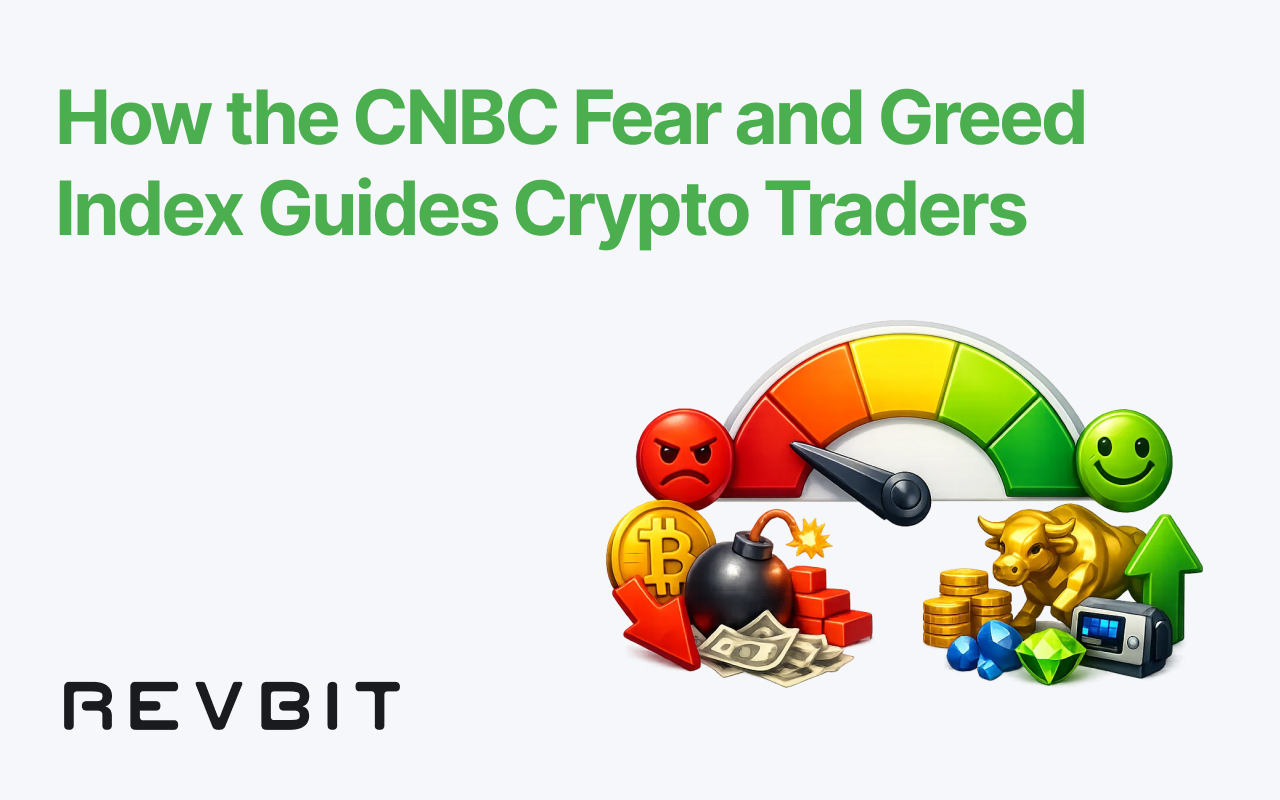

The crypto market is driven by technology, liquidity, narratives, and macroeconomic pressure. It is also driven by emotion. Prices can rise too far because traders become convinced that the next breakout is only beginning. Prices can also fall too fast because panic spreads quicker than clear thinking. That is why the fear and greed index remains such a useful tool for anyone trying to understand market behaviour.
Many market participants search for the CNBC fear and greed index when they want a quick reading of sentiment. In practice, crypto traders also rely on dedicated digital asset sentiment tools, including the well known fear greed index crypto models that convert market behaviour into a simple score. Whether you call it the crypto greed and fear index, the fear & greed index crypto, or simply the crypto fear index, the basic idea is the same. It measures whether the market is acting frightened, confident, or overheated. Used properly, it can help traders avoid emotional decisions and improve timing.
What is the fear and greed index?
The fear and greed index is a sentiment gauge. It converts a range of market signals into a score between 0 and 100. Lower readings suggest fear. Higher readings suggest greed. In most versions, the scale is interpreted in bands such as extreme fear, fear, neutral, greed, and extreme greed. Dedicated crypto versions use the same broad logic and are designed to capture sentiment in digital asset markets, with Bitcoin often acting as the main reference point.
For traders, the appeal is obvious. The fear greed index crypto format turns a messy collection of signals into a quick summary. Instead of trying to judge every price move emotionally, you get a snapshot of market mood. It does not tell you what price will do next with certainty. It tells you how stretched sentiment may already be.
That distinction is important. The fear and greed index is not a crystal ball. It is closer to a sentiment thermometer. When readings are extremely low, traders may already have sold aggressively and priced in too much bad news. When readings are extremely high, the market may be too comfortable and too eager to chase upside. In both cases, the value of the index comes from showing when emotion is becoming one sided.
Why crypto traders care so much about sentiment
Sentiment matters in every market, but crypto is unusually sensitive to it. Traditional assets often move within mature institutional frameworks. Crypto still reacts sharply to leverage, crowd positioning, online narratives, and round the clock trading. A fearful market can keep falling because liquidations force more selling. A greedy market can keep climbing because traders fear missing out.
This is why the fear greed index crypto approach has become popular with retail traders, swing traders, and even longer term investors. It provides context. If a trader sees a strong rally while the crypto greed index is already deep in greedy territory, they may become more selective with new entries. If the market is falling hard but the crypto fear index is flashing extreme fear, they may look for signs of exhaustion instead of joining the panic.
In other words, the fear and greed index helps answer a crucial question: are traders responding to fresh information, or are they simply reacting to each other?
How the crypto version is usually calculated
A crypto sentiment model is not based on one datapoint. It blends several indicators that reflect the behaviour of market participants. Widely used crypto versions describe factors such as volatility, market momentum, trading volume, social media activity, surveys in some earlier periods, Bitcoin dominance, and search trends. The score is then updated to show whether the market is leaning towards fear or greed.
This is one reason the crypto greed and fear index is so useful. It does not rely on opinion alone. It looks at what traders are actually doing. Rising volatility during a sharp sell off can increase fear. Surging volume during a strong rally can strengthen greed. A jump in interest around crypto related search terms can also signal a shift in crowd psychology.
For many traders, the most practical feature is the crypto fear and greed index chart. A chart lets you compare today’s reading with the last week, month, or year. That historical context matters. A reading of 65 may look bullish on its own, but it means something different if the market has been above 80 for days. Likewise, a move from 18 to 30 may still reflect fear, yet it can signal improving confidence after a capitulation phase.
The role of the CNBC fear and greed index in crypto thinking
The phrase CNBC fear and greed index appears frequently in search behaviour because traders often connect mainstream market sentiment with crypto sentiment. Even when they are using a dedicated fear greed index crypto tool, they still want to know whether risk appetite is improving across the wider financial system.
That is a sensible instinct. Crypto does not always move in isolation. If equities are under pressure, volatility is rising, and investors are rotating away from risk, digital assets can feel the impact. In that sense, the broader market style of the fear and greed index helps traders understand the environment around crypto, while the crypto specific version helps them read the internal mood of the sector itself.
A smart trader does not confuse the two. The broader market indicator reflects general investor appetite. The crypto version reflects conditions inside digital assets. Used together, they can be powerful. If both are showing fear, the market may be in a genuine risk off phase. If mainstream markets are stable but the crypto greed and fear index is collapsing, the weakness may be more specific to crypto.
How traders actually use the fear greed index crypto signal
The simplest use of the fear greed index crypto tool is as a filter. Traders check the reading before entering positions. If the market is already in extreme greed, they avoid impulsive entries after a large green candle. If the market is in extreme fear, they avoid panic selling into weakness.
Another approach is reversal hunting. Some traders look for the fear and greed index to reach emotional extremes and then wait for technical confirmation. For example, if the score falls into extreme fear and price begins to stabilise at a major support zone, that combination can suggest sellers are becoming exhausted. The sentiment signal alone is not enough, but it helps identify moments when a reversal becomes more plausible.
Longer term investors often use the crypto fear index in a calmer way. Instead of trying to catch exact bottoms, they may scale into positions when fear dominates and reduce aggressive buying when greed becomes excessive. This can improve discipline, especially in a market where emotions tempt people to do the opposite.
Momentum traders can also benefit. If the crypto greed index is rising from fear towards neutral and price structure is improving, that shift may confirm that sentiment is turning rather than merely bouncing. In that case, the fear and greed index becomes a supporting tool for trend development rather than a contrarian signal.
Common mistakes traders make
- The first mistake is using the fear and greed index as a stand alone entry system. A low reading does not guarantee a bottom. A high reading does not guarantee a top. Markets can remain fearful for longer than expected and greedy for longer than seems rational.
- The second mistake is ignoring the time frame. A daily sentiment reading may help a swing trader, but it is less useful for someone making decisions on a five minute chart. The fear greed index crypto reading works best when matched with your trading horizon.
- The third mistake is reading greed as automatically bearish. Strong bull markets often spend long periods in greedy territory. Greed can mean the market is overheated, but it can also mean trend strength is real. Context matters. Traders should compare sentiment with structure, volume, macro conditions, and key support or resistance levels.
- The fourth mistake is failing to study the crypto fear and greed index chart over time. One reading is just a snapshot. A sequence of readings tells a better story. Is fear deepening? Is greed fading? Is sentiment recovering before price does? These shifts often provide more value than the headline number alone.
A balanced way to include it in your strategy
The best use of the fear and greed index is as part of a framework. Start with trend analysis. Then check support and resistance. Review volume, momentum, and volatility. After that, use the fear greed index crypto score to understand whether the crowd is likely to be underreacting or overreacting.
For example, imagine Bitcoin is approaching long term support after a heavy sell off. If the crypto greed and fear index shows extreme fear and selling volume begins to cool, that may support a cautious accumulation plan. On the other hand, if Bitcoin has already rallied hard into resistance and the fear & greed index crypto reading is near extreme greed, a trader may tighten risk and avoid late entries.
This is why disciplined traders respect sentiment without worshipping it. The indicator is most valuable when it sharpens judgement. It is least valuable when it replaces judgement.
Final thoughts
Crypto traders often spend too much time searching for certainty. The market rarely offers it. What it does offer are clues, and the fear and greed index is one of the clearest clues about crowd psychology. It can highlight panic when selling becomes emotional. It can reveal complacency when buying turns euphoric. Most importantly, it can help traders slow down and think.
Whether you monitor a broad market sentiment gauge often associated in search with the CNBC fear and greed index, or you focus on a dedicated fear greed index crypto tool, the lesson is similar. Extreme emotions tend to create poor decisions. The trader who recognises that early is already in a stronger position.
The best results come from using the fear and greed index alongside technical analysis, risk management, and patience. When you treat it as a guide rather than a prophecy, it becomes far more useful. In a market as emotional as crypto, that edge can make a real difference.
FAQ
Is the fear greed index crypto reliable?
It is useful, but it is not sufficient on its own. The fear greed index crypto works best as a supporting tool alongside chart analysis, volume, volatility, and risk management.
What does extreme fear mean in a crypto fear index?
Extreme fear usually suggests traders are highly cautious or panicked. In some cases, that can signal a market that is oversold. However, extreme fear does not guarantee an immediate rebound.
Why do people search for the CNBC fear and greed index for crypto?
Many traders use the phrase CNBC fear and greed index when looking for a quick sentiment gauge. In practice, crypto traders often combine broad market sentiment with a dedicated crypto greed and fear index to get a fuller view of risk appetite.
How should I use the crypto fear and greed index chart?
The crypto fear and greed index chart is most useful when you compare current readings with recent history. Watching how sentiment changes over days or weeks can reveal whether fear is worsening, easing, or turning into greed.
Can the fear & greed index crypto predict the market?
No. The fear & greed index crypto does not predict price with certainty. It shows crowd sentiment, which can help you identify extremes, but it should not be treated as a guaranteed signal.