
So, if you are sitting there asking what is SUI, you’re looking at the project that completely ripped up the traditional blockchain blueprint and started from scratch. Let’s dive deep into how this network works, why developers are flocking to it in 2026, and whether it truly deserves a spot in your portfolio.
If you’ve been paying any attention to the layer-1 blockchain wars over the past few years, you’ve likely seen a massive narrative shift. We are no longer just talking about who has the cheapest fees; we’re talking about architecture that can actually handle the scale of the global internet.
Why SUI is Disrupting the Layer 1 Landscape
The market is crowded with fast blockchains. But raw speed doesn’t mean much if the underlying plumbing gets clogged the second a popular NFT mint goes live.
From Meta’s Libra/Diem to Mysten Labs
To really grasp what is SUI blockchain technology, you have to look at its roots. The project wasn’t born in a garage; it was incubated inside Meta (formerly Facebook). A team of elite cryptography engineers was working on Meta’s ambitious “Diem” blockchain project. When regulatory pressure killed Diem, those engineers left to form Mysten Labs. They took the absolute best parts of their research, including a revolutionary new programming language, and built the SUI network from the ground up.
SUI in 2026: Reaching the Top 10 by Market Cap
Fast forward to 2026. The days of treating this as a “testnet experiment” are long gone. The SUI token has cemented itself as a top-tier digital asset, routinely battling legacy giants for volume and total value locked (TVL). It has transitioned from a promising VC-backed startup into a hardened, battle-tested network handling millions of transactions daily without breaking a sweat.
The Vision: A Blockchain That Scales Like the Internet
When people ask, “whats SUI price aiming to achieve?”, the answer isn’t just “beating Ethereum.” The goal is internet-scale adoption. Mysten Labs realized that for Web3 to work, blockchains need to scale horizontally; exactly how cloud servers like AWS work. If you need more capacity, you just add more machines.
How SUI Works: The “Object-Centric” Revolution
This is the most critical section of this guide. If you want to understand the SUI crypto ecosystem, you have to understand its data model. It is completely different from Ethereum or Solana.
Understanding SUI’s Unique Data Model
Almost every legacy blockchain (like Ethereum) uses an “Account-Based Model.” Think of it like a global ledger of bank accounts. If you want to send someone a token, the entire blockchain has to pause, check your account balance, deduct the funds, add them to the receiver, and update the global state. Everyone waits in the same single-file line.
The SUI blockchain uses an “Object-Centric Data Model.” Instead of tracking accounts, the network tracks objects. An object can be a smart contract, an NFT, or a digital coin.
Imagine handing your friend a physical $20 bill. You don’t need to call a bank to verify your total net worth before handing it over; you just give them the object. SUI treats digital assets the exact same way. You own specific digital objects, and you can transfer them directly.
Parallel Execution
Because the network tracks objects instead of a global account state, it unlocks a superpower: parallel execution.
If Alice is sending a SUI coin to Bob, and Charlie is buying an NFT from Dave, these transactions don’t touch the same objects. Therefore, the network processes them simultaneously on completely different pathways. There is no single-file line. This allows the network to scale its throughput almost infinitely just by adding more validator hardware. Learn more ways on how to make money with NFTs.
Casual vs. Consensus Transactions
Not all transactions need intense security checks. SUI categorizes transactions. Simple transfers (like sending tokens to a friend) bypass the heavy consensus protocol completely. They are processed almost instantly. Only complex, shared-object transactions (like interacting with a decentralized exchange liquidity pool) require full consensus.
Mysticeti Consensus: The Upgrade That Changed Everything
Source: Gate.io
If you are reading old guides asking what is SUI?, they probably mention the “Narwhal and Bullshark” consensus engines. Forget them. In 2025, the network deployed a massive upgrade called Mysticeti.
Mysticeti dropped the network’s transaction latency to under 400 milliseconds. It is so fast that clicking a button on a SUI protocol decentralized app feels exactly like clicking a button on a traditional, centralized website. The blockchain delay is virtually imperceptible to human users.
The SUI Token: Utility, Governance, and Value Capture
So, what is SUI crypto actually used for? The native token is the economic lifeblood of the entire ecosystem.
Gas Fees
Every time you do something on-chain, you pay a tiny fee in SUI token. But SUI does something brilliant: a portion of that fee goes into a “Storage Fund.”
Blockchains are essentially giant hard drives that never delete data. Eventually, storing all that data gets expensive. Instead of passing those future costs onto future users (which is why Ethereum got so expensive), the Storage Fund pays validators to store data in perpetuity. If you delete your data later, you actually get a rebate on your tokens!
Staking and Delegated Proof-of-Stake (dPoS)
You can put your tokens to work. Through Delegated Proof-of-Stake, retail holders can lock their coins with a network validator. In exchange for providing economic security to the network, you earn a compounding yield paid out in newly issued tokens.
On-Chain Governance
If you hold the token, you have a voice. Major network upgrades, parameter changes, and community grant distributions are decided via on-chain voting. The more tokens you hold, the more weight your vote carries in shaping the future of the ecosystem.
The Move Programming Language
You can’t discuss what is SUI coin without talking about the code that makes it run.
Asset Safety by Design
Ethereum was built using Solidity. Unfortunately, Solidity treats tokens as variables, which makes them incredibly easy to accidentally duplicate or destroy, leading to billions of dollars in hacks over the years.
The Move programming language was designed specifically for digital assets. In Move, an asset is a “resource” that can never be copied or implicitly discarded. It must be explicitly passed from one place to another. This mathematically prevents the majority of the reentrancy attacks and exploits that plague older networks.
Programmable Transaction Blocks (PTBs)
This is a massive 2026 narrative. PTBs allow a user to string together up to 1024 distinct actions into a single transaction. You could claim staking rewards, swap those rewards for a stablecoin, deposit that stablecoin into a lending protocol, and mint an NFT, all with one click and paying just one tiny gas fee. It completely changes the user experience.
The Enhancements That Make SUI Faster
While Aptos uses standard Core Move, Mysten Labs created “SUI Move.” They tweaked the original language specifically to support their object-centric data model, allowing developers to write code that naturally benefits from parallel execution without having to engineer complicated workarounds.
The 2026 Ecosystem: DeFi, Gaming, and Beyond
The SUI network crypto space isn’t just theoretical; it hosts a thriving, multi-billion dollar economy.
DeepBook: The Order Book Powering SUI DeFi
Source: Deepbook
While most chains rely on Automated Market Makers (AMMs) like Uniswap, SUI boasts DeepBook. A native, massively scalable Central Limit Order Book built directly into the base layer. This allows professional traders and institutions to trade with the same precision and order types they expect from traditional finance, fueling massive liquidity for the ecosystem.
Web3 Gaming
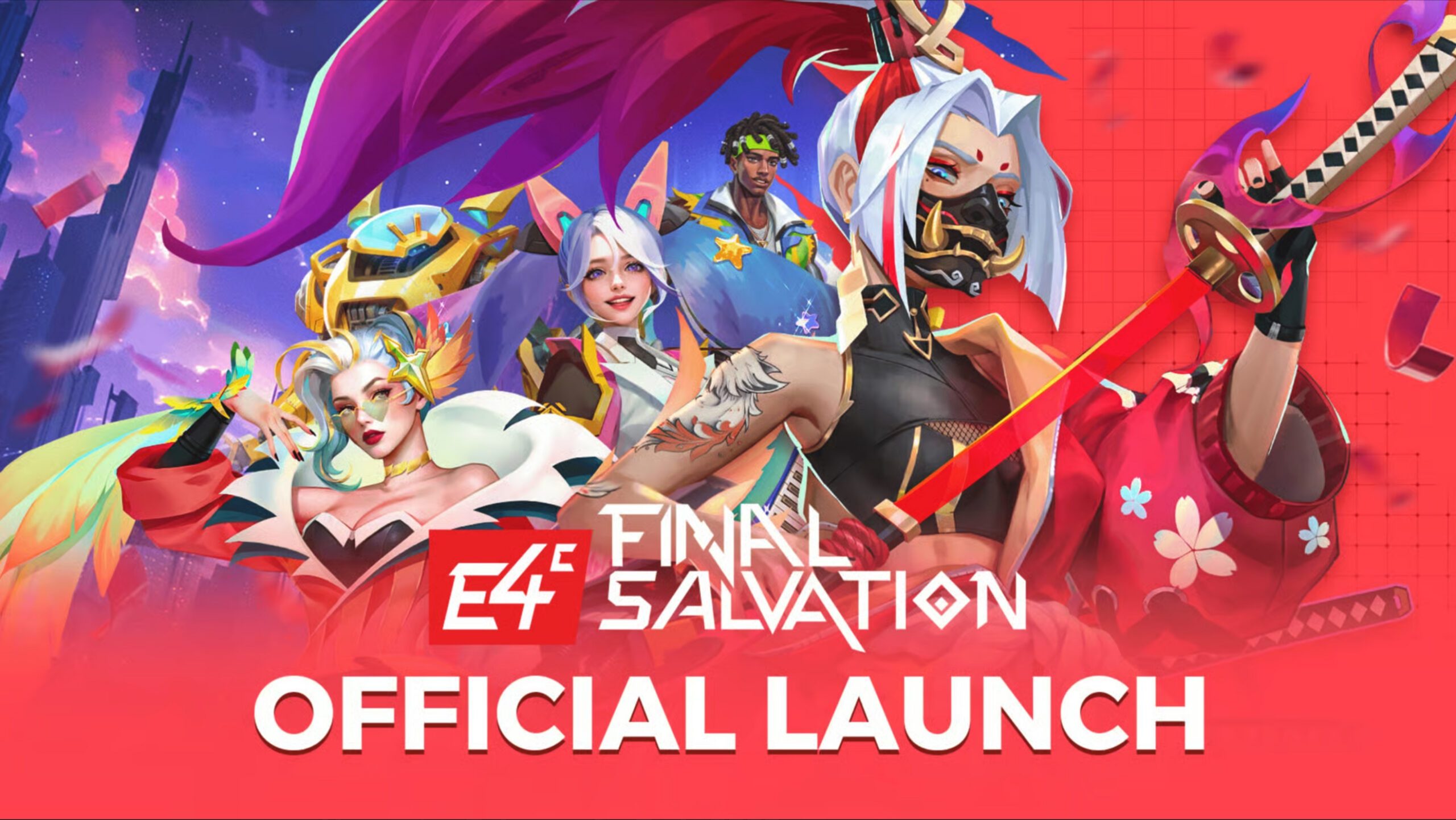
E4C: Final Salvation Launches on Sui Blockchain. Source: Games.gg
Gaming requires thousands of micro-transactions a minute. Because of parallel execution and imperceptible fees, the SUI chain has become the premier destination for Web3 game developers. In 2026, we are seeing fully on-chain RPGs and competitive shooters where every item is a unique object on the blockchain.
The Rise of SUINS
No one wants to type out a 64-character hexadecimal wallet address. SUI Name Service (SUINS) allows users to register .SUI digital identities, streamlining payments and creating a unified profile across all decentralized applications.
Native Stablecoins: The Role of USDC and USDSUI
A DeFi ecosystem is only as strong as its stablecoins. With the deep integration of native USDC and local alternatives, users have highly liquid, price-stable trading pairs that don’t rely on risky third-party bridging protocols.
Institutional Adoption
Wall Street doesn’t ignore fast, reliable tech. In 2026, the institutional footprint on this network is undeniable.
How Wall Street is Accessing SUI
The launch of the Grayscale SUI Trust was a watershed moment. It allowed high-net-worth individuals, family offices, and traditional hedge funds to gain direct price exposure to the SUI token through a regulated, traditional brokerage account without having to manage private keys. This brought a massive influx of traditional capital into the ecosystem.
SUI’s Bid for Corporate and Enterprise Integration
Mysten Labs isn’t just targeting crypto-natives; they are pitching enterprise solutions. By offering private and consortium deployments of the technology, massive corporations are using the network’s object model to track real-world supply chains, loyalty points, and secure data transfers.
How Coinbase and BitGo Secure Institutional SUI
For billions of dollars to enter a network, institutions need military-grade security. Top-tier custodians like BitGo and Coinbase Prime provide fully insured, cold-storage solutions specifically tailored to the network’s unique cryptographic signature requirements.
SUI vs. The Titans: A Comparative Analysis
How does it stack up against the competition in 2026? Let’s look at the hard data.
| Metric | SUI | Solana | Aptos | Ethereum |
| Peak TPS | 120,000+ | ~65,000 | ~30,000 | 15 – 100 |
| Time to Finality | <400ms | ~500ms | ~1 second | 12s – 1 min |
| Programming Language | SUI Move | Rust | Move | Solidity |
SUI vs. Solana
Solana has dominated the high-speed conversation for years, but it has historically struggled with network outages during periods of massive congestion. Because SUI processes independent transactions in parallel, it bypasses the global state bottlenecks that occasionally crash Solana. Furthermore, the Mysticeti upgrade gives SUI a slight, but measurable, edge in transaction finality speed.
SUI vs. Aptos
Aptos and SUI are “sister chains” born from the ashes of Meta’s Diem. While both use the Move language, their architecture is wildly different. Aptos uses a traditional account-based model with an engine called Block-STM to force parallel execution. SUI’s object-centric model handles parallelization much more naturally, which has arguably led to smoother developer adoption and higher peak performance.
SUI vs. Ethereum L2s
Ethereum is trying to scale through Layer-2 rollups (like Arbitrum or Base). The problem? Liquidity becomes fragmented across dozens of different L2s, and bridging assets is a massive security risk. SUI takes a “monolithic” approach. Everything happens on one unified layer, keeping liquidity pooled together and eliminating the need for clunky cross-chain bridges.
Tokenomics and Supply: Navigating the Unlock Schedule
You shouldn’t invest a dime until you understand the token supply dynamics.
There will only ever be 10 billion tokens in existence. About half of these were allocated to the Community Reserve, while the other half went to early contributors, Mysten Labs insiders, and VC investors.
The 2026 Vesting Reality
In 2024 and 2025, the market was terrified of “cliff unlocks,” where massive chunks of early investor tokens flooded the market, often suppressing the price. By 2026, the steepest part of that unlock curve is largely behind us. The monthly vesting schedules are now smoother and easily absorbed by the deep liquidity of the modern market.
Circulating Supply vs. FDV
Always track the Fully Diluted Valuation (FDV) versus the market cap. Because a significant portion of the total supply is still locked, the network needs continuous new capital entering the ecosystem to offset the gradual inflation caused by the remaining vesting schedules.
Security and Safety: Is SUI a Safe Investment?
The graveyard of crypto is filled with “fast” chains that got hacked. Security is paramount.
Audit History: Reviewing the Security of the Move VM
The Move Virtual Machine (VM) has undergone brutal, continuous auditing by top-tier security firms like Zellic and OtterSec. Because the language prevents asset duplication at the compiler level, the base layer is remarkably secure against the types of flash-loan exploits that plague older networks.
Decentralization Check: Who Runs the SUI Validators?
A common critique of high-speed chains is centralization. While SUI requires highly powerful server hardware to run a validator (meaning not everyone can run a node on their laptop), the validator set is geographically distributed and economically incentivized to remain honest through the dPoS system.
Best Practices for Self-Custody
If you buy the token, get it off the exchange. Top non-custodial options include the official SUI Wallet extension, mobile options like BlueMove, and robust hardware wallet integration via Ledger Nano, ensuring your private keys never touch the internet.
How to Buy, Stake, and Use SUI in 2026
Ready to dive in? Here is the practical guide to interacting with the network.
Top Exchanges: Where to Find the Best Liquidity for SUI
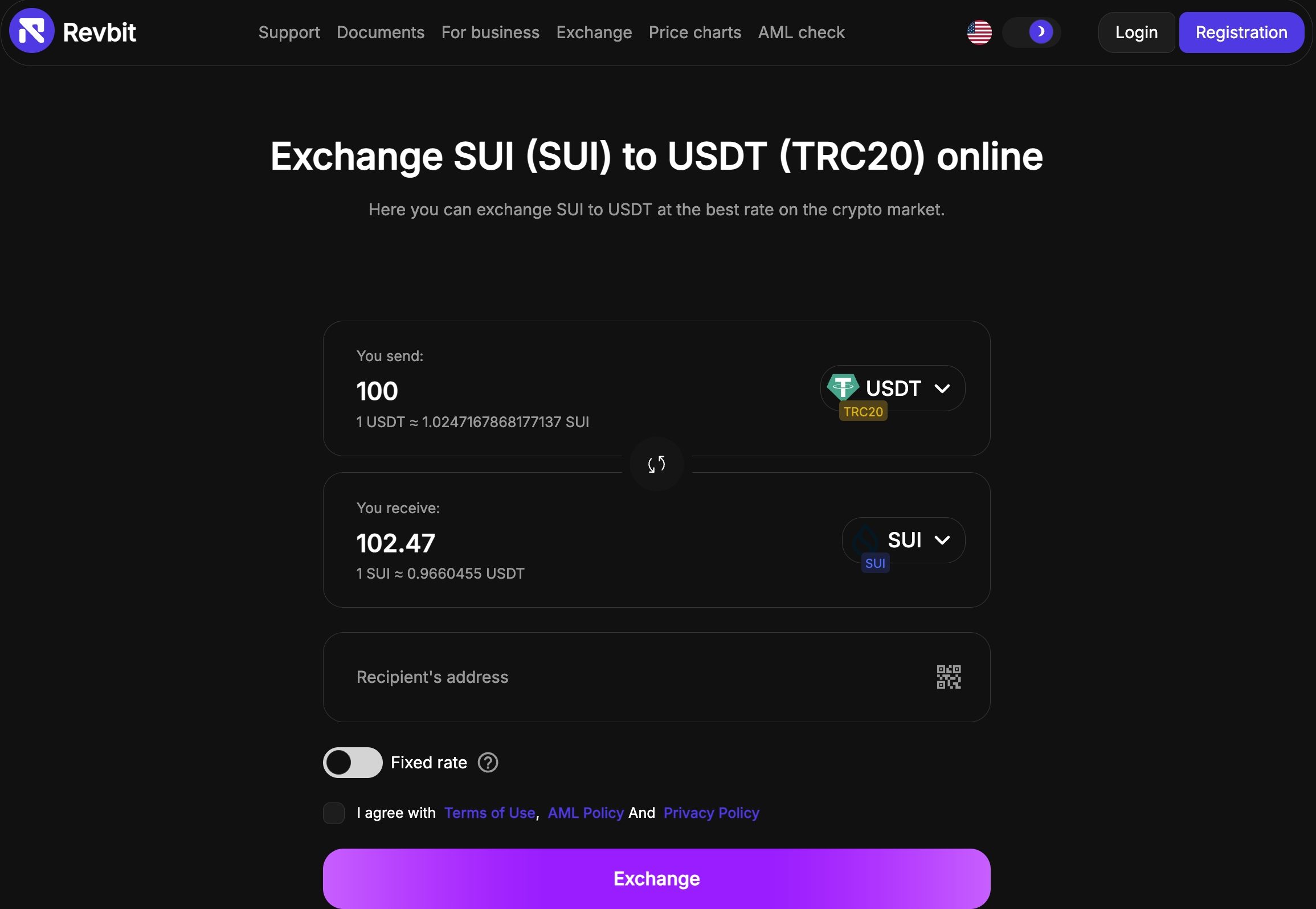
You can purchase the token on virtually every major centralized exchange globally. Use Revbit to exchange SUI to USDT fast. Binance, Coinbase, Kraken, and OKX offer incredibly deep order books, meaning you can buy large amounts with minimal price slippage.
Step-by-Step: How to Stake SUI for Maximum Yield
- Withdraw your funds to a self-custody wallet (like SUI Wallet).
- Click the “Stake & Earn” tab directly within the wallet interface.
- Browse the list of active validators. Look for one with a high uptime percentage and low commission fees.
- Select your amount and confirm. Your tokens never leave your wallet; you simply delegate your voting power to earn APY.
Bridging to SUI: Moving Assets from Ethereum and Solana
If you have capital trapped on slow networks, you can use decentralized protocols like Wormhole or Celer Network to bridge your USDC or Ethereum directly over to the network, allowing you to instantly start participating in the local DeFi scene.
The Future: SUI’s Roadmap for 2027 and Beyond
Mysten Labs isn’t resting on their laurels. The roadmap for the next few years is highly aggressive.
Mobile-First Web3
The development of the SUIPlay0X1 handheld gaming device proved that the network is serious about consumer hardware integration. The future involves native, operating-system-level integration with mobile phones, making blockchain transactions completely invisible to the end user.
Decentralized Storage
With the continuous expansion of the Storage Fund mechanics, the network is positioning itself to be a primary hosting layer for decentralized websites and permanent digital media, rivaling dedicated storage networks.
Is SUI the Solana Killer or a New Category?
Calling it a “Solana Killer” is too simplistic. The object-centric model represents a fundamental paradigm shift in how we process digital ownership. It isn’t just trying to be a faster version of the old tech; it is trying to be a completely new category of database architecture capable of supporting global enterprise and consumer tech simultaneously.
FAQ: Frequently Asked Questions About SUI
Is SUI better than Solana?
“Better” depends on your needs. SUI’s object-centric model theoretically allows for higher parallel scaling without the global state bottlenecks that have caused Solana outages in the past. Additionally, the Move programming language offers significantly tighter security guardrails than Solana’s Rust. However, Solana still boasts a massive, highly established community.
Why is SUI called an “Object-Centric” blockchain?
Instead of using an account-based ledger (where a global database tracks user balances), SUI treats every token, NFT, or smart contract as a distinct “object” with its own unique ID. Because these objects are independent, the network can process thousands of transactions simultaneously as long as they don’t involve the exact same object.
Can I mine SUI tokens?
No. You cannot mine the token with graphics cards like you did with Bitcoin. The network uses a Delegated Proof-of-Stake (dPoS) consensus mechanism. To earn more tokens, you must purchase them and “stake” them with a validator to help secure the network.
What is the minimum amount of SUI required for staking?
The barrier to entry is virtually non-existent. You can begin staking directly from your Web3 wallet with as little as 1 SUI token, making it incredibly accessible for retail investors looking to earn passive yield.